

With so many universities in Australia for international students to choose from, it can be overwhelming, especially when planning your studies from the Philippines. University rankings are not the only factors you should consider. Course availability, tuition fees, entry requirements, location, scholarships and post-study opportunities are all important.
Some universities are located in Australia’s major cities, while others have campuses in regional areas. They offer programmes across fields such as business, information technology, nursing, engineering, education and science. The right institution will depend on your academic background, budget and long-term goals.
This guide will help Filipino students compare Australian universities and prepare for the admission process.
Table of Contents
- Why Do Filipino Students Choose Australian Universities?
- Best Universities in Australia for International Students
- Australian Universities and Courses: What Can You Study?
- Affordable Universities in Australia for International Students
- Entry Requirements for Filipino Students
- How to Choose the Right Australian University
- Get Help Choosing an Australian University
Why Do Filipino Students Choose Australian Universities?
International students consider Australia for its quality education system, internationally recognised qualifications and multicultural communities. Students can choose from undergraduate, postgraduate and research programmes across a wide range of fields.
Some reasons Filipino students consider studying in Australia include:
- Wide course selection: Universities offer programmes in business, IT, engineering, health, education, science and other disciplines.
- International learning environment: Students have the opportunity to learn alongside people from different cultural and educational backgrounds.
- Practical learning opportunities: Many courses include projects, placements, research or industry-related learning.
- Different study locations: Students can compare metropolitan campuses with universities in regional areas.
- Scholarship opportunities: Some institutions offer scholarships to international students, depending on academic performance and eligibility.
However, these benefits and opportunities vary between institutions and programmes. Researching your options before choosing a course is important.
Best Universities in Australia for International Students
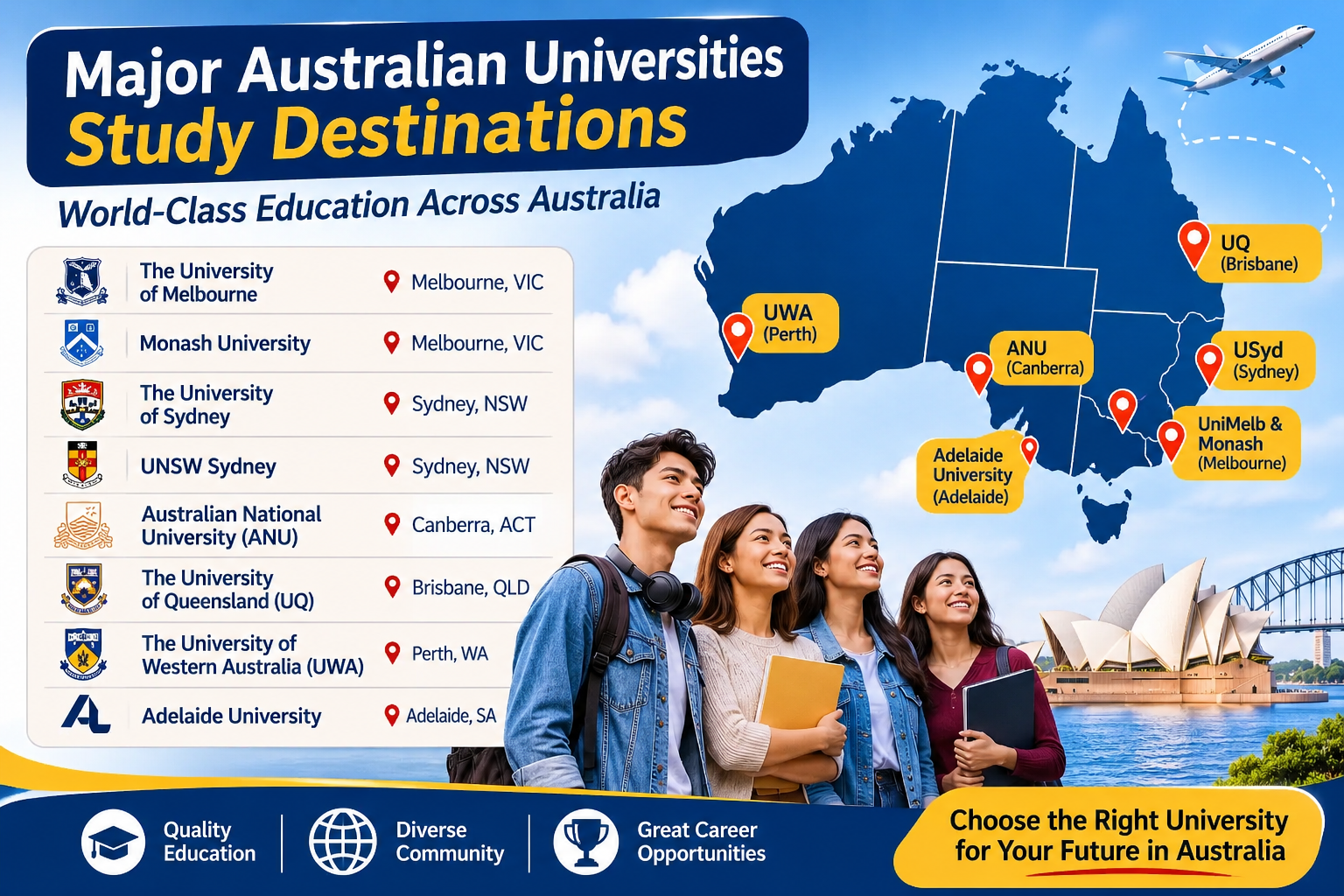
Several well-known Australian universities offer programmes to international students. The following are examples of institutions to explore. This is not a ranking, and inclusion does not guarantee admission.
| University | Location | Popular Study Areas |
|---|---|---|
| The University of Melbourne | Melbourne, Victoria | Business, engineering, health and arts |
| Monash University | Melbourne, Victoria | Pharmacy, IT, engineering and business |
| The University of Sydney | Sydney, New South Wales | Business, health, engineering and science |
| UNSW Sydney | Sydney, New South Wales | Engineering, technology, business and law |
| Australian National University (ANU) | Canberra, ACT | Research, science, international relations and policy |
| The University of Queensland (UQ) | Brisbane, Queensland | Science, business, engineering and health |
| The University of Western Australia (UWA) | Perth, Western Australia | Engineering, science, business and health |
| Adelaide University | Adelaide, South Australia | Business, technology, health and science |
These universities are part of Australia’s Group of Eight research universities. However, reputation is not the only factor to consider when choosing an institution. Compare course structure, entry requirements, tuition fees and available student support before making a decision.
Australian Universities and Courses: What Can You Study?
The most suitable university will depend on the qualification and career area you want to pursue. Some common study areas among international students include:
Business and Management
Options include accounting, finance, marketing, international business and management. These programmes may suit students interested in corporate, commercial or entrepreneurial careers.
Information Technology
Students can explore computer science, cybersecurity, data analytics, software development and information systems.
Engineering
Specialisations include civil, mechanical, electrical, software and environmental engineering. Some programmes have specific mathematics or science prerequisites.
Nursing and Health Sciences
Courses may cover nursing, public health, biomedical science and other health-related disciplines. Check professional accreditation and placement requirements before applying.
Education
Students can consider early childhood, primary and secondary education. Some programmes have additional English language, placement or professional registration requirements.
Science and Research
Options include biological sciences, environmental science, biotechnology and other research-oriented disciplines.
Before choosing a programme, check the subjects, course duration, practical components, accreditation and relevance to your career interests. A popular course may not necessarily be the right option for every student.
Affordable Universities in Australia for International Students
Tuition fees are an important consideration when comparing Australian universities. However, there is no single university that is the cheapest option for every student. Fees depend on the institution, qualification, course and year of entry.
For example, the University of the Sunshine Coast lists tuition fees of approximately AUD 28,500 for international undergraduate students in some programmes. Swinburne University of Technology publishes different annual fees across its bachelor’s degrees, including AUD 36,280 for some arts degrees and AUD 41,600–43,430 for business degrees.
These examples show why students should check the fees for their specific course rather than relying on general averages.
When comparing lower-cost universities in Australia, consider:
- Annual tuition fees for your chosen programme.
- Scholarships and tuition discounts for which you may be eligible.
- Living expenses and accommodation costs.
- Public transport and other location-related expenses.
- Course duration and the total cost of completing the qualification.
A lower tuition fee does not necessarily mean a lower overall study cost. Consider the full cost before accepting an offer.
For more information about budgeting, read APG’s guide: Australia Study Budget Guide for Filipino Students.
Entry Requirements for Filipino Students
Entry requirements vary depending on the university, course and qualification. Filipino applicants are generally expected to meet the academic and English language requirements for their chosen programme.
1. Academic Qualifications
For undergraduate admission, universities may assess previous secondary education and other recognised qualifications. Filipino applicants may be asked to provide their Senior High School Diploma, Academic Track details, grades and any additional documents required by the institution.
Postgraduate admission generally requires a recognised bachelor’s degree and satisfactory academic performance. Some programmes may also require relevant work experience or prerequisite subjects.
For example, the University of Wollongong provides academic entry information specific to the Philippines and accepts recognised Senior High School qualifications for certain undergraduate programmes. Required academic scores can vary by course and pathway.
2. English Language Proficiency
Applicants may need to demonstrate English language proficiency through an accepted test, such as IELTS Academic, PTE Academic or TOEFL iBT. Minimum scores vary by university and course. Some programmes, particularly in health and education, may have higher English language requirements.
3. Supporting Documents
Depending on the institution and programme, applicants may need to provide:
- Academic transcripts and certificates.
- Senior High School Diploma or bachelor’s degree certificate.
- English language test results, where required.
- Passport identification page.
- Personal statement or other supporting documents, if requested.
- Portfolio, work experience evidence or references for selected programmes.
Meeting the minimum entry requirements does not guarantee admission. Universities assess applications individually and may consider additional course-specific conditions.
You can also read APG’s guides to documents required for Filipino students to study in Australia and Transcript of Records requirements.
How to Choose the Right Australian University
Before submitting applications, compare your shortlisted universities across the following factors:
- Course suitability: Does the programme match your academic background and career interests?
- Entry requirements: Are your Philippine qualifications accepted, and do you meet the required grades?
- Total study costs: Can you manage tuition fees and living expenses for the full course duration?
- Location: Would you prefer a major city or a regional study destination?
- Scholarships: Are you eligible for university scholarships or tuition discounts?
- Student support: Does the institution offer international student services, academic support and suitable facilities?
Take time to compare at least two or three institutions. A careful comparison can help you choose a course and university that better match your circumstances and plans.
Before submitting your application, understand the admission process, required documents and important steps involved in applying to Australian universities. Read our guide on how Filipino students can apply to Australian universities.
Get Help Choosing an Australian University
Choosing a university involves much more than comparing rankings or tuition fees. Filipino students should consider an institution and course that suit their academic qualifications, financial situation and future plans.
Asia Pacific Group (APG) is a study abroad consultancy and education counselling company based in the Philippines, assisting students who want to study in Australia. Our education counsellors can guide you through course and institution options, application requirements and the next steps in your study journey.
Thinking of studying in Australia? Speak with APG about your education options and arrange a complimentary consultation.
If you need professional guidance with course selection, university applications and your study plans, connect with APG, one of the study abroad consultants in the Philippines helping Filipino students explore study opportunities in Australia.
Planning to Study in Australia?
Get guidance on courses, universities and admission requirements from APG’s education counsellors.
Disclaimer: University course availability, tuition fees, entry requirements and scholarships may change. Information in this guide is general in nature. Students should confirm the latest details directly with their chosen university before applying.
